
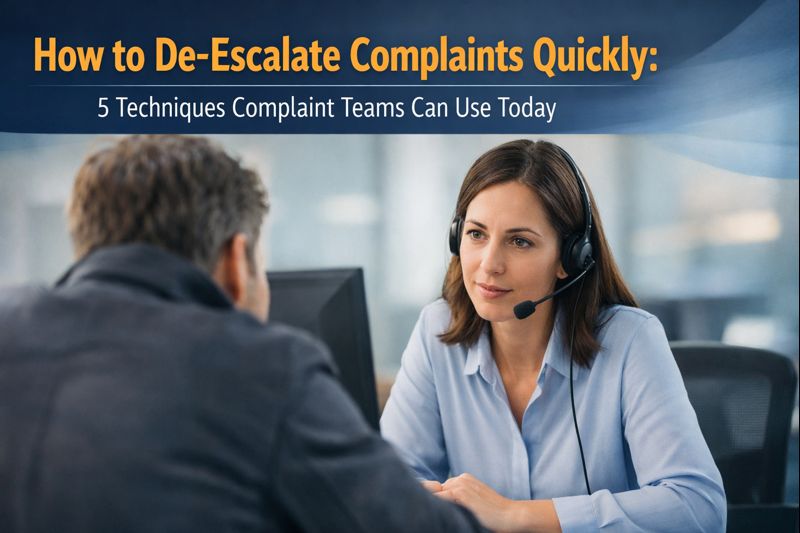
When complainants feel unheard, dismissed or confused, emotions rise quickly. Once that happens, escalation often follows, not because the issue is complex, but because the interaction feels unsafe or adversarial.
The good news is that escalation is not inevitable. With the right communication techniques, frontline staff can de-escalate early, preserve trust and prevent unnecessary workload for complaints teams and managers.
Here are five practical techniques complaint teams can use immediately.
1. Acknowledge the Emotion First
Before moving into facts or process, reflect what you’ve heard.
“I can hear how frustrating this has been for you, and I want to understand what’s gone wrong.”
Why it works
When people feel emotionally acknowledged, the brain’s threat response settles. This creates the conditions for a more rational, cooperative conversation and makes resolution possible.
2. Use Honest, Human Language
Avoid formulaic phrases such as:
- “We apologise for any inconvenience caused”
- “Your concerns have been noted”
These can feel distancing or insincere, even when well-intended.
Instead, try:
- “I’m sorry this has happened — let’s work through it together.”
- “I can see why this would be upsetting.”
Clear, human language signals respect and reduces defensiveness.
3. Ask One Clarifying Question at a Time
People who are already stressed can feel overwhelmed by long or layered questions.
Keep questions short and purposeful:
- “Can you tell me when this first happened?”
- “What outcome were you hoping for?”
This helps staff gather accurate information without increasing emotional load.
4. Offer Micro-Choices to Reduce Resistance
Escalation often comes from a loss of control. Offering small choices can restore a sense of agency.
Examples:
- “Would you prefer updates by phone or email?”
- “Shall we look at this now, or would you like me to call you back later today?”
Even minor choices can significantly reduce resistance.
5. Summarise Back Before Concluding
Before ending the interaction, give a brief summary:
“Just to check I’ve understood: you’re concerned about X, this happened on Y date, and what you’re looking for is Z.”
Why it matters
A 15-second summary reduces misunderstanding, prevents repeat contact and shows the complainant they’ve been listened to.
Final Thought
Effective complaint handling isn’t about scripts. It’s about psychological safety, clarity and empathy.
Small communication shifts at the frontline can dramatically reduce escalation, protect staff wellbeing and improve outcomes for everyone involved.
Want to build these skills across your teams?
Want to build these skills consistently across your team?
Book a consultation to explore tailored complaint-handling training.
Follow us on Linked In for more articles and tips